Chronicle
The castle sits on the 272.2 m Burgberg, now almost all vineyard. Burgberg and Schemelsberg are erosional outliers, cut off from the Löwensteiner Berge massif by the Sulm and Stadtseebach. Both carry a seam of Schilfsandstein, Stuttgart Formation: the rock the castle and Johanneskirche are built of. Some ten quarries lay nearby, more in Weinsberg itself, one very small on the Burgberg; the stone’s origin is undocumented.
No building date survives; the castle is probably early 11th century. That it stood in 1037 is attested only indirectly, by a notice of around 1430, some four centuries later: Adelheid von Metz reportedly lived there until Öhringen’s collegiate church was founded. Conrad III besieged it in 1140, beat the relieving army on 21 December; the garrison surrendered. The king let the women take what they “could carry on their shoulders”; they carried their husbands down. Written down only around 1175/1200 in the Cologne Royal Chronicle, at least 35 years later. The story was never proved, nor disproved. The name “Weibertreu” probably arose only in the 18th century; before that it was simply Burg Weinsberg.
In 1504 Duke Ulrich of Württemberg took it, cannon fire damaging the keep and the northern curtain wall. On 16 April 1525 peasants stormed, looted and burnt it. A ruin since, shaped by centuries of stone-hauling, not the fire: after the 1707 town fire the ruling house released the rubble stone, the more valuable ashlar was to stay. It went anyway.
Justinus Kerner, district physician from 1819, stopped that. In 1823 he founded the Frauenverein with six townswomen; King Wilhelm I granted it the ruin in 1824. The society funded upkeep partly with 14-carat gold rings, each with a chip of the ruin. From rubble Kerner raised the so-called “chapel”, never a chapel, a museum since 2005.
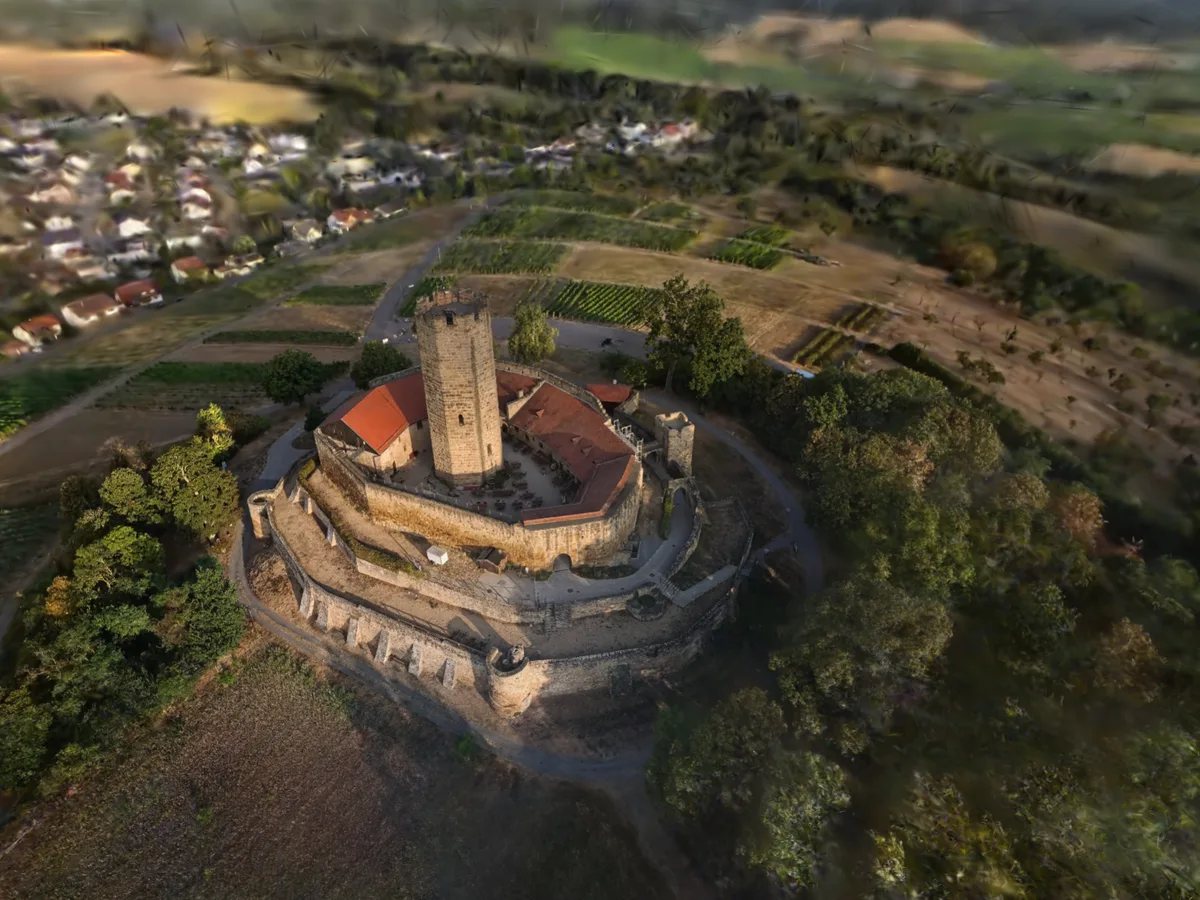
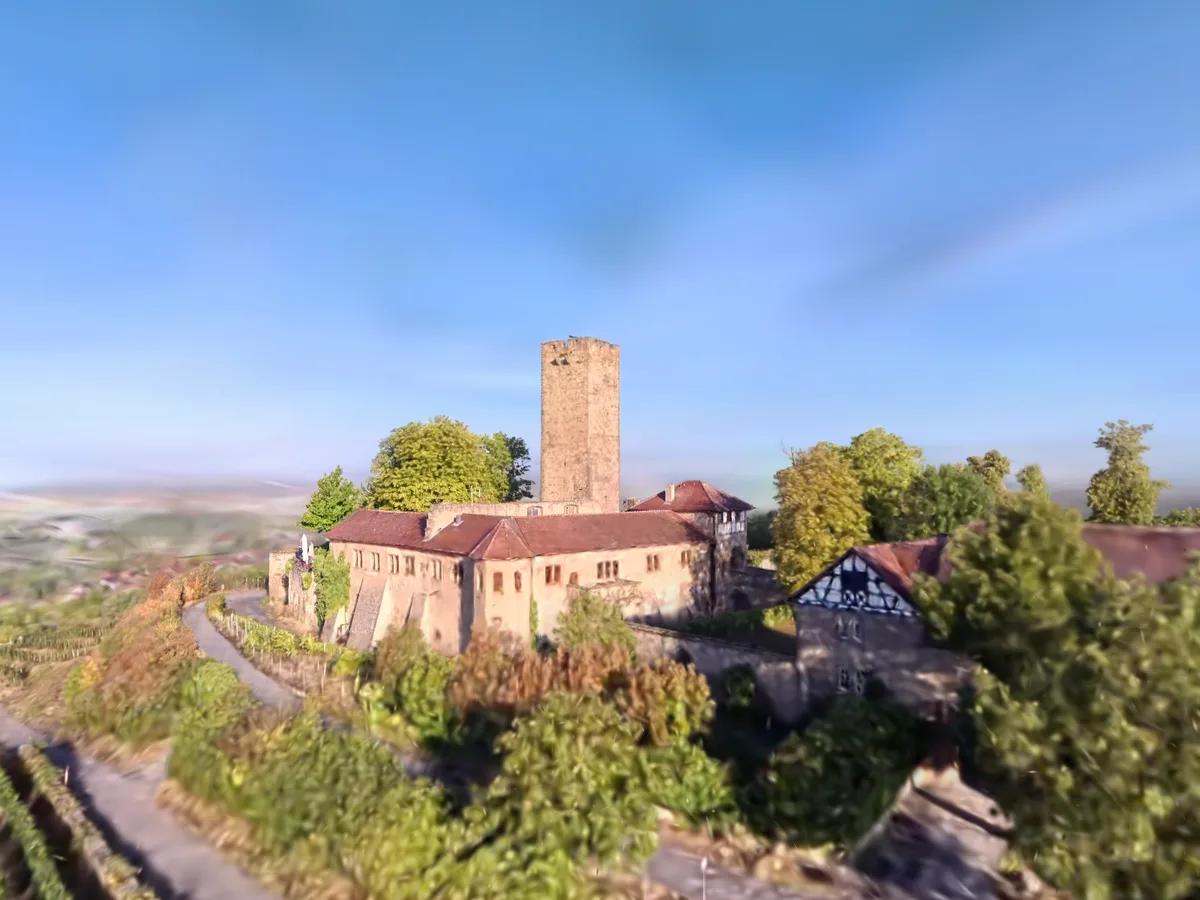
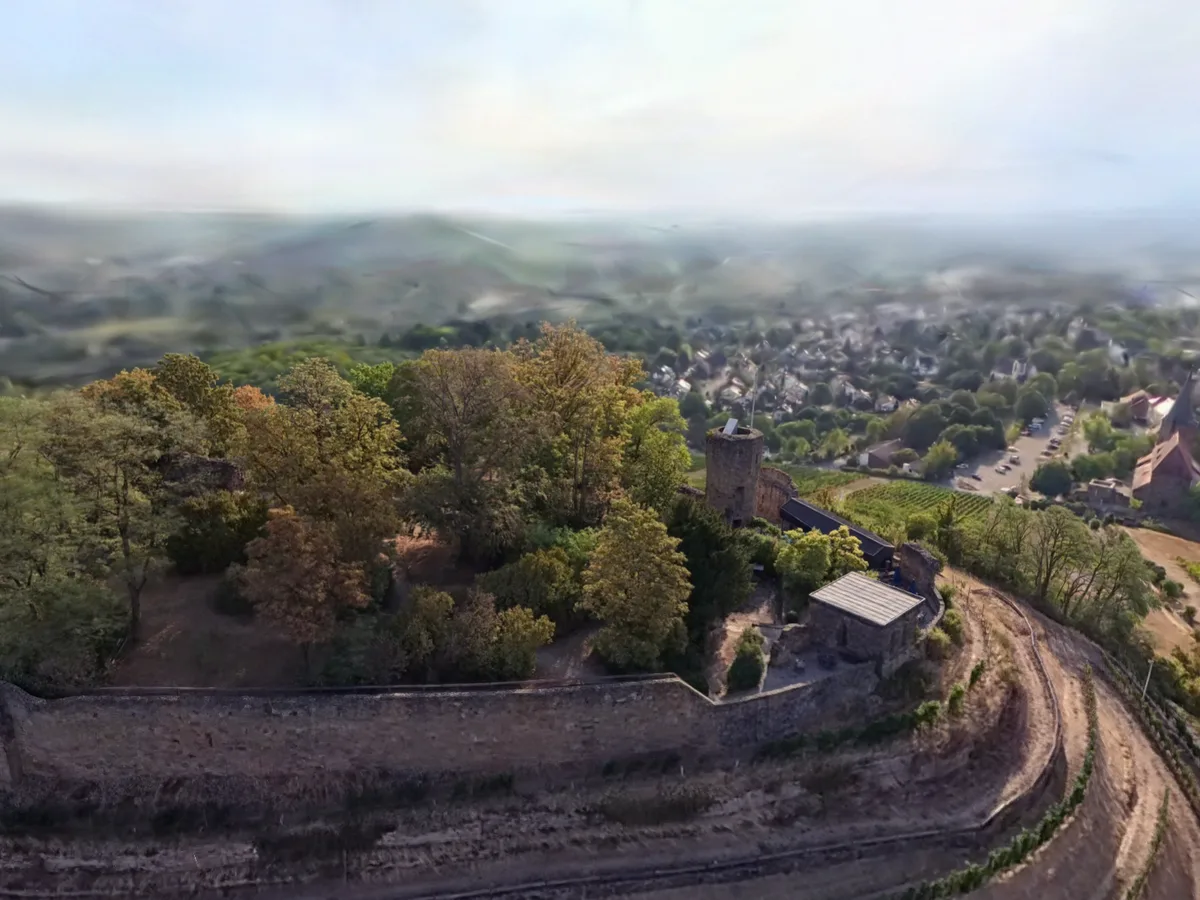
What stands: the curtain wall, in parts rebuilt; north-east the Dicke Turm, probably under Duke Ulrich, possibly a century later; south-east a tower, round below, octagonal above. Admission is charged. The scan shows green ground inside the walls, Kerner’s Aeolian harps in the Dicke Turm’s gun loops, sounding in strong wind.